FIDIC Contracting Expertise

Building trust
and
Avoiding contract
disputes before they arise
energy-i work with and
advise our clients on the use of the FIDIC suite of contracts for energy and
infrastructure projects.
At energy-i our approach is unique, as our focus is to
build trust and avoiding contract disputes, to avoid long and costly claims and
dispute processes for all parties.
At energy-i our ability to understand both technical and
commercial /contractual aspects of a project is key.
FIDIC - what is it?
FIDIC contracts, developed by the International Federation of
Consulting Engineers;
-
in French Federation
Internationale Des Ingenieurs Conseils or FIDIC.
FIDIC contract templates are a cornerstone of international
energy and infrastructure project contracting. The FIDIC suite of contracts are
designed to ensure clarity in roles, responsibilities, and risk allocation.
FIDIC`s robust and comprehensive framework of contracts is
widely used internationally for large-scale complex infrastructure and energy
projects, and increasingly for smaller less complex projects.
FIDIC Rainbow Suite - Which one is used where?
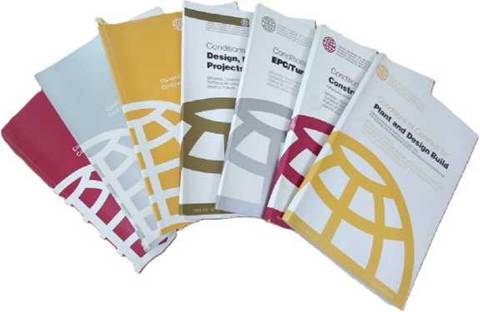 The FIDIC suite includes several widely recognized model form
contract templates called `books` . Each has been developed for specific
project types and requirements:
There are 4 main contract
templates or books
1. Red Book (Conditions of Contract for Construction):
For projects where the employer provides the design, making it
suitable for traditional construction contracts.
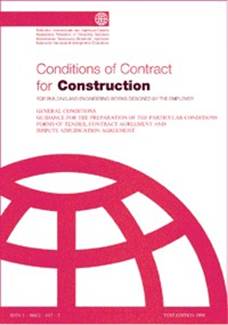 Many of our clients are familiar with the Red Book even if they
do not use the FIDIC suite.
The first edition of the FIDIC Red Book, published in 1957, was
not drafted entirely from scratch. Instead, it was an authorised `re-badging`
of the Institution of Civil Engineers (ICE) Conditions of Contract. The. FIDIC
Red book was a formalisation the heavily modified the ICE framework already in
wide use, and retains much of the original ICE structure and clause numbering
2. Yellow Book (Conditions of Contract for Plant and Design-Build):
For projects where the contractor is responsible for both design
and construction.
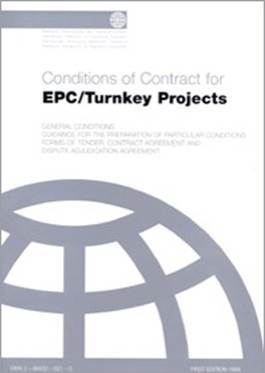
3. Silver Book (Conditions of Contract for EPC/Turnkey Projects):
For engineering, procurement, and construction projects, where
the contractor takes on a turnkey delivery role with minimal employer
involvement.
4.  Green Book (Short Form of Contract):
A simplified contract for
smaller projects or less complex works. The Green Book is increasingly used
since issue in 1999, and is now part of the Rainbow Suite. FIDIC states it is for
engineering and construction works of relatively small capital value, or for
'fairly simple or repetitive work` contracts. It is used for works of value
normally less than USD $500,000 and of less than 6 months duration.
There are 4 ancillary or
supporting model form FIDIC contract templates;
1.
Gold Book (Conditions of
Contract for Design, Build, and Operate):
For projects that combine the design, construction, and
operation phases into a single contract. The Gold Book is a design-build contract, which
is heavily based on the Yellow Book, with an agreement attached for operation
and maintenance during a typical 20-year Operation Service Period.
2. Blue Book (Dredging and Reclamation Contract):
For dredging and reclamation works, as well as ancillary
construction projects. The FIDIC Dredging Contract is sometimes known as
the Blue Book or Blue-Green Book. Prepared in conjunction with the
International Association of Dredging Companies, the Dredging Contract has been
extensively used for coastal and marine works, of all kinds, including ports
and harbours. It is widely used in the Middle East by a highly specialised
marine sector. It bears some resemblance to the Green Book Short Form of
Contract in being a straightforward, simplified contract, which can be executed
on both a design-build basis or with a significant employer design element.
3. White Book (Client/Consultant Model Services Agreement):
Used for agreements between clients and consultants such as
engineers or architects. The White Book differs from the other Rainbow Suite contracts
in that it is not a construction contract. The contract is between the
purchaser of the services, the 'Client' rather than 'Employer', and the
supplier of the services, the 'Consultant', rather than 'Contractor'. The White
Book is an agreement or contract for general use. It is used for pre-investment
and feasibility studies, detail design and administration of construction and
project management services. It is used for both for Employer-led design teams
and for Contractor-led design teams on design and build projects.
4.
Pink Book (The Multilateral
Development Banks Harmonised Red Book):
A version of the Red Book adapted for Multilateral Development
Bank-financed projects. The Pink Book is formalisation of the
amendments to the Red Book that have been developed by Multilateral Development
Banks (MDBs), for use in aid-funded projects. The FIDIC Red Book was used
widely, over many years, on development projects funded by banks, as part of
mandatory bidding documents to which developers (or borrowers) and their
Contractors had to adhere. The purpose of the Pink Book is to simplify the use
of the FIDIC Conditions of Contract not only for the MDBs and their borrowers,
but also for others involved with project procurement including engineers,
contractors, and contract specialists. The Pink Book is intended for use on MDB
financed projects only.
Sub-contracting under FIDIC
The FIDIC Suite also make provision for
sub-contracting under the main contact or book.
The FIDIC sub-contract template is;
- Conditions for Subcontract for Construction for Building and Engineering Works Designed by the Employer, 2011.
Role of the Engineer
The Engineer plays a significant
role within the risk management system in the FIDIC suite. In all contracts
except Silver Book the Engineer performs the tasks of technical supervision and
contract administration, but also contributes to the prevention of adverse
events, the allocation of responsibilities between the parties, and the
resolution of emerging disputes.
The Engineer plays an important
role in coordinating changes, documenting contract-relevant circumstances, and
reducing the likelihood of disputes
FIDIC Sliver Book
Traditional FIDIC forms such as
the Red Book relied on shared risk and an independent Engineer acting as a fair
mediator. However, during the 1990s boom in private infrastructure and
independent power projects (IPP), private lenders and project financiers
refused to back ventures with potentially open-ended cost overruns or schedule
delays. The Silver Book was developed specifically to transfer key risks which
cause such delays and cost overruns to the single-point Contractor in exchange
for a `fixed` lump-sum contract price which reflects these key risks.
The key risks typically include
adverse ground and underground conditions, weather delays, design coordination
and supply chain issues.
The Silver Book was developed to
meet the needs of the project finance market, where lenders demand a high
degree of certainty on project cost and duration. The Silver Book is a
`turnkey` contract and has some notable features;
- Maximum Risk Transfer: In theory the Contractor
takes on almost all risks related to design, construction, and project
completion for a fixed price.
- Turnkey Delivery: The Contractor
hands over a fully operational facility to the Employer.
- Limited Employer Role: The role of
the Engineer is removed, and the Employer's direct involvement is minimised.
When is FIDIC Silver Book used?
FIDIC Silver Book is used for privately-financed projects such
as power plants where the Employer is less involved from a technical
perspective, and prioritises project cost and duration certainty above all
else.
 The Real-World FIDIC of Silver Book Contracting;
While in theory under the Silver Book, the
Contractor takes on almost all risks related to design, construction, and
project completion for a fixed price.
In the real world of contract negotiations, contractors heavily
push back against standard FIDIC Silver Book terms because the default
framework transfers almost all project risk to them.
In all instances the Silver Book
standard terms or conditions are modified by special conditions.
Because an unamended Silver Book
can expose an EPC contractor to catastrophic financial losses, legal and
commercial teams typically target several core clauses for heavy modification
including typically;
- Employer`s Requirements (Sub-Clause 5.1)
- Unforeseen Subsurface and Ground Conditions (Sub-Clause 4.12)
- Absolute `Fitness for Purpose` Guarantees (Sub-Clause 4.1)
|
Silver Book Default |
Typical Contract Amendment |
|
Contractor carries all design data risk. |
Employer remains liable for un-verifiable
baseline data. |
|
Contractor absorbs all ground risk. |
Insert Yellow Book Sub-Clause 4.12 (Unforeseeable
Physical Conditions). |
|
Absolute fitness for purpose. |
Tied strictly to PI insurance policy limits. |
|
Gross negligence bypasses liability caps. |
Remove gross negligence or tightly define it
contractually. |
Lack of an Independent Engineer
in the Silver Book;
The Silver Book removes the
traditional, independent "Engineer" role. Instead, the contract is
administered directly by an Employer`s Representative, meaning the
employer serves as both a party to the contract and its initial judge.
Contractors push back on the
strict 14-day or 28-day notice windows for claims, knowing an Employer's
Representative is incentivised to reject them. They will negotiate to give the
Dispute Avoidance/Adjudication Board (DAAB) more immediate, binding authority
to resolve mid-project disputes.
The lack of a trusted Engineer in
the Silver Book is one area likely to be addressed in the future.